
Millbrae City Directory Collections
Millbrae does not appear only in a stand-alone title. The verified historical material is spread across regional volumes, a Millbrae Householders Guide, a San Bruno directory, library databases, and county or state collections. The table separates confirmed runs from companion sources so a search starts with a real year and keeper rather than a generic shelf assumption.
| Collection | Years | Where Held | Access |
|---|---|---|---|
| Coast Directory Co. regional directories with Millbrae sections | 1942, 1943, 1944, 1945, 1947-48, 1948-49, 1949-50 | Golden Nugget Library / SFgenealogy | Free images and PDFs |
| Millbrae Householders Guide / reverse lookup | 1942 and dedicated 1948-49 sections | Same digitized run | Free online |
| San Bruno directory with Millbrae and Lomita Park | 1950, 1953 | Golden Nugget Library | Free online |
| San Mateo County newspapers and obituaries | Title and year vary | SMCL databases and local newspaper archives | Card or in-library limits vary |
| Federal census | 1790-1950 nationally; county material after 1856 | NARA and genealogy databases | 1950 and earlier public |
| Naturalization certificates | 1800-1991 stated by the County Clerk | San Mateo County Clerk | Search and copy rules apply |
| Sanborn fire-insurance maps | Millbrae-specific sheets not confirmed | Library of Congress and California libraries | Search by Millbrae and adjacent sets |
The strongest starting run is the free regional scan set. It is verified, but it is not a claim of a complete run, a complete household list, or a known last printed year. The physical shelf list at Millbrae Library and exact Polk years remain a research gap. The library catalog or reference desk should confirm whether a desired volume exists locally before a trip.
The Millbrae-inclusive historical directory collection gives the clearest online view of the regional pages and reverse sections.
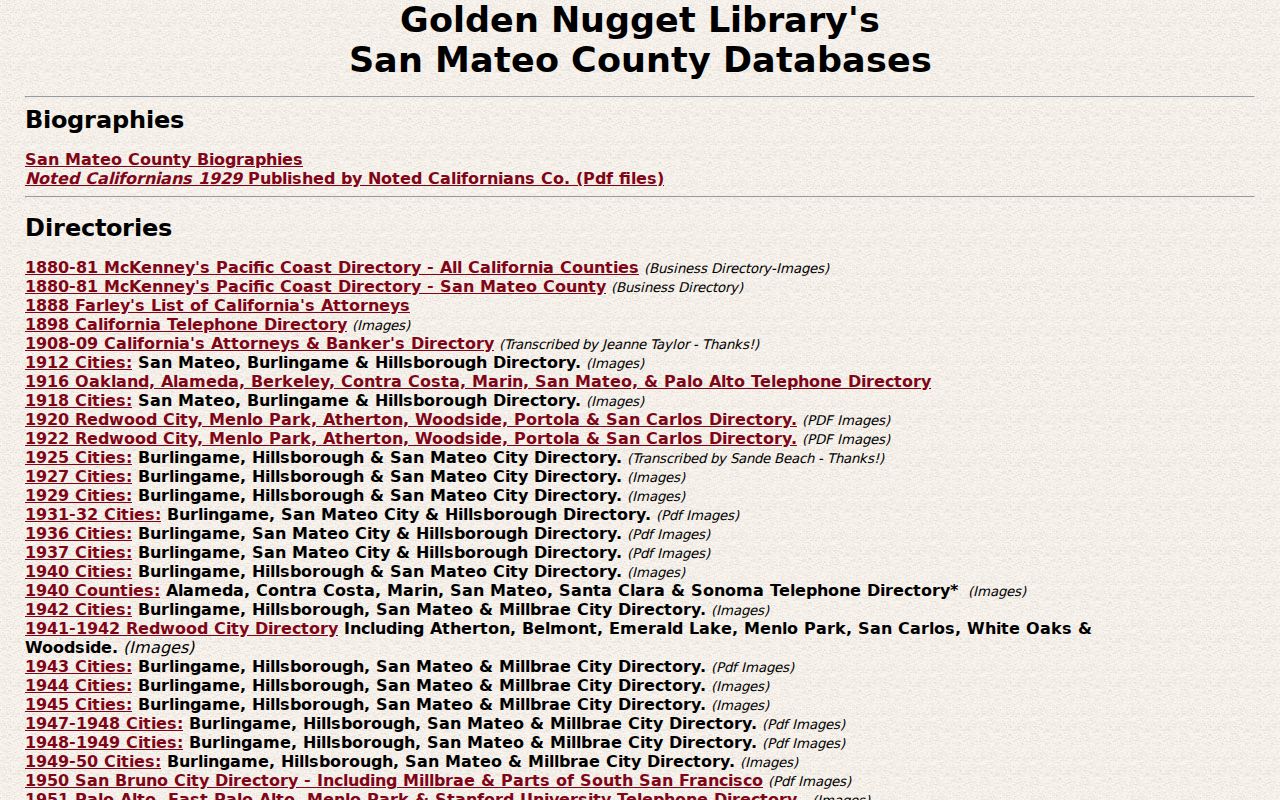
Those scans make the Millbrae sections available for name, street, and year comparison while leaving the catalog gap visible.
Note: Verified digital years are research leads, not proof that every intervening edition survives or that a final printed year is known.
Where Millbrae City Directories Appear
The Coast Directory Co. material places Millbrae inside a broader Burlingame, Hillsborough, and San Mateo regional title. The title identifies Coast Directory Co. and Leila Woodmansee as publisher, and describes residents over 18, schools and churches, residence and street guides, and classified guides. That framing matters: the cover may name a larger Peninsula market even when the useful page is the Millbrae section.
Search the title and its local section together. A surname may be in the alphabetical resident pages, while a street name is in the reverse guide. The San Bruno directory is a second cross-boundary check because its 1950 and 1953 editions include Millbrae and Lomita Park. A result under San Bruno is therefore not proof that the household moved out of Millbrae; it may reflect the publisher's regional coverage.
Use the same care with the phrase “city directory.” In Millbrae, it can mean a regional Coast volume, the dedicated 1948-49 Householders Guide section, or a neighboring city's book that includes local streets. Record the title, page type, year, and section label beside every name so a later researcher can reproduce the path.
Ask Millbrae Library About City Directories
Millbrae Library is at 1 Library Avenue, Millbrae, CA 94030. Published hours are Monday through Thursday, 10-8, and Friday through Sunday, 10-5. The branch email is millbrae@smcl.org, and the system phone is 1-833-YES-SMCL. Ask for a catalog or reference check by publisher, title, and year. The public web material does not itemize the branch's physical directory shelf, exact Polk runs, reverse directories, or obituary indexes.
The library's digital route has several different rules. Ancestry Library Edition is available in a branch or on library Wi-Fi. HeritageHub and HeritageQuest are remote options for qualifying cardholders. HeritageHub includes obituaries and death notices from 1704 to today. HeritageQuest includes federal census material, the Freedmen's Bank, and PERSI. My China Roots adds immigration, burial, and zupu material, which can help with Chinese family-history questions when names or spellings vary.
The SMCL genealogy database listing is the right place to check current access rules before relying on a licensed collection.

Library database access can fill a gap between a scanned directory page and a newspaper or census clue, but it does not replace checking the source title and page.
NewsBank adds a newspaper path. Its listed coverage includes the San Mateo Daily Journal from October 2, 2000, the San Mateo County Times from September 15, 2001, and the San Francisco Chronicle and Mercury News from 1985. The Chronicle database excludes obituaries, so an obituary search needs a different database or archive route.
Reading a Millbrae City Directory Entry
The 1942 Millbrae sample gives a compact lesson in how a city directory compresses household facts: “Abarr Edw B (Virginia E) flight eng Pan-American Airways h 1155 Hillcrest.” Read from left to right. “Abarr” is the surname. “Edw B” is the given name and middle initial. “Virginia E” in parentheses is the spouse. “Flight eng” is the occupation, followed by the named employer. The `h` marker means home or householder, and the street address is 1155 Hillcrest.
| Surname and name | Abarr Edw B: surname, given name, and middle initial. |
|---|---|
| Spouse | Virginia E appears in parentheses beside the named person. |
| Occupation and employer | “Flight eng” and Pan-American Airways are historical entry fields. |
| Home marker | `h` identifies home or householder in the sample line. |
| Street address | 1155 Hillcrest supplies the address clue for a reverse lookup. |
| Residence marker | `r` can mean resides or rooms in other entries. |
| Reverse pages | Street, house number, and occupant listings support address-first searching. |
Do not expand the line beyond what it says. A named householder or telephone subscriber is not automatically every person in the home. Occupation and employer are useful historical clues for separating people with the same name, while the address and spouse field help test whether two entries belong to one household.
- Criss-cross directory
- A reverse section arranged by street and house number, with an occupant or householder clue instead of an alphabetical surname order.
- Householder index
- A directory-style list centered on the person or household named by the publisher, not a promise that every resident appears.
- Abbreviation key
- The volume's explanation of short marks such as `h` and `r`; find and record it before expanding any entry.
- Index versus image
- An index points to a name or page, while the scanned page preserves the original wording and layout for checking.
Alphabetical and Criss-Cross Pages
Alphabetical pages answer a name-first question. Reverse or criss-cross pages answer a street-first question. Use both when possible. Start with a known surname, then copy the full line, including initials, spouse, occupation, marker, and address. Next, find the address in the street section. If the two views disagree, keep the disagreement in the notes rather than silently choosing one.
Street pages are also where a changing household becomes easier to spot. One year may show a person at an address, while the next year shows another surname or the `r` marker. That change could reflect a move, a roomer, a spelling choice, or the publisher's editing. Adjacent editions are more useful than a single isolated hit.
The Online Archive of California helps with collection descriptions across California institutions. Search “Millbrae,” a family name, an organization, or a subdivision, then check whether the result is a finding aid, a digitized page, or only a catalog description.
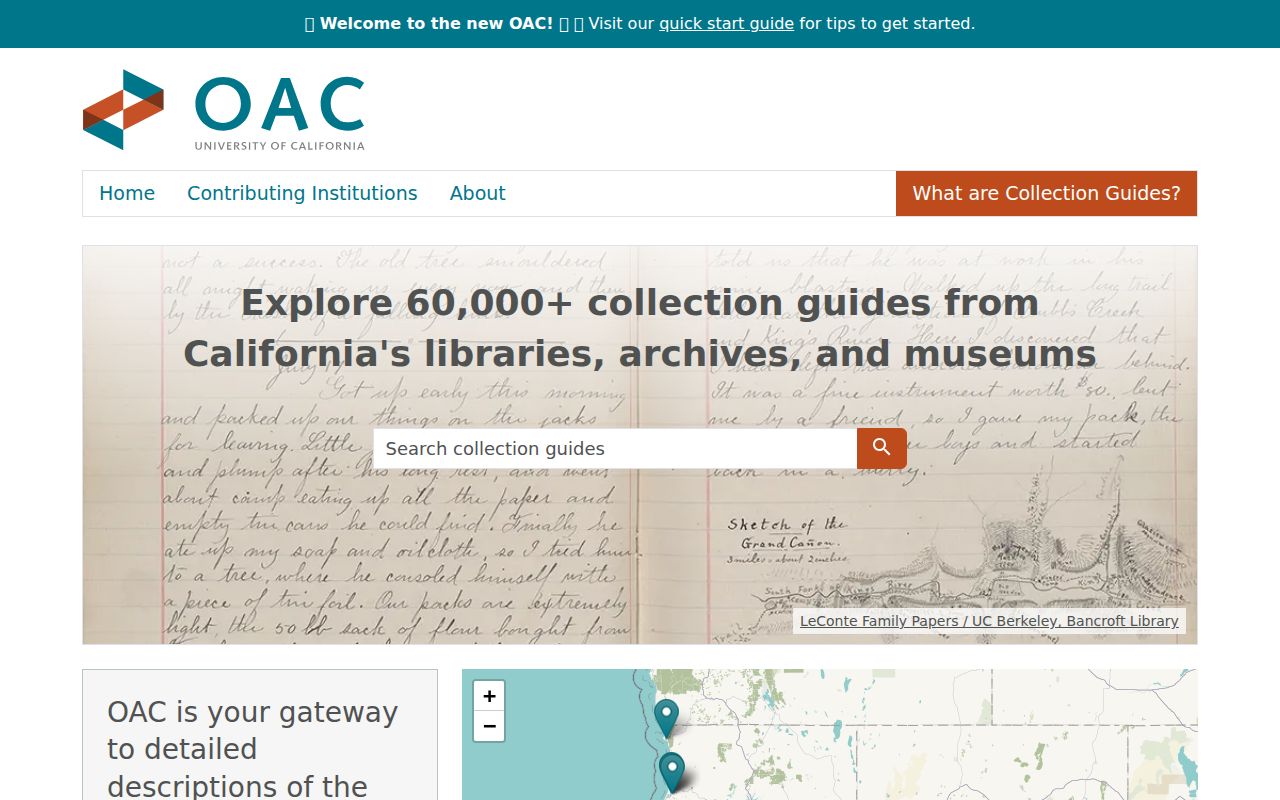
That distinction keeps an archival lead honest: an OAC description can point to a repository without proving that a public resident roster is online.
Trace a Millbrae Household Through Directories
A household trail works best when each city directory entry is treated as one dated point. Begin with the clearest name and address, then move through nearby years. Keep the original spelling and the page type in the research log.
- Start with a known name, address, or year in one verified Millbrae directory section.
- Check the prior and next available edition, noting moves, initials, spouse names, and changes in the entry line.
- Flip to the reverse pages and compare the street, house number, and listed occupant clue.
- Pair the directory evidence with the 1940 or 1950 census when the household falls in those years.
- Use newspapers, obituary notices, probate, or cemetery evidence to test a move, death, or family connection.
A name that disappears has several possible explanations. The person may have moved, died, gone unlisted, or been absorbed into a different household entry. A nearby year can show which explanation fits. Probate and an obituary can be especially useful when an old address trail reaches a deceased owner, but the result should still be matched to the exact name and place.
Pair Millbrae City Directories With Census
The census supplies a different household view. The 1950 census is the latest fully public decennial enumeration under the 72-year rule. Census pages can show household members, ages, relationships, occupations, birthplaces, and address. Enumeration districts and boundary changes can complicate a search, so a directory street clue helps narrow the right page before a name is treated as a match.
Use the 1940 directory material as a bridge toward the 1940 census, and the 1948-50 directory material as a bridge toward the 1950 census. Do not expect the year pairs to match in every detail. A directory may center on a householder or subscriber, while the census records the household as counted by an enumerator. Differences in spelling, age, or relationship are prompts for more checking, not instant proof of two separate families.
The National Archives 1950 census resource explains the public census context. Copy the enumeration district, sheet, household line, and address with the directory citation so the two sources remain distinct.
Move From Millbrae Directory to Deed
A city directory gives a historical address clue, while a deed gives a recorded property transaction. They answer different questions. For a later ownership trail, carry the street address into the county property map or APN record, then use the San Mateo County Recorder's grantor-grantee index. RecorderWorks indexes documents from 1985, while older work and free image viewing are available at Redwood City public terminals.
RecorderWorks is indexed by names and document details such as document type, date, map, book and page, and APN. The recorder's office says staff do not perform a title search or provide legal advice, so arrive with the directory name, address, APN, instrument clue, or date already written down. A deed result can support an ownership sequence, but it does not turn a directory entry into proof of who occupied the house.
For the full modern address chain, use the Millbrae by-street records workflow, which keeps parcel and address research separate from the historical city directory search.
Millbrae Directories Before Incorporation
San Mateo County formed in 1856 from San Francisco County territory. Millbrae incorporated in 1948. That split is more than a date in a timeline: it tells a researcher where to look. A 1942 Millbrae section predates the city government, so early directory, land, court, and newspaper evidence belongs in county or regional sources rather than a City Hall file.
- 1856 San Mateo County formed, creating the county jurisdiction for later county records.
- 1942 The earliest verified Coast Directory Co. regional run in the Millbrae collection appears.
- 1948 Millbrae incorporated, while the dedicated 1948-49 Householders Guide section supplies a local reverse lookup.
- 1950 A San Bruno directory includes Millbrae and Lomita Park, and the federal census becomes the matching public-era household source.
- 1953 The San Bruno directory again includes Millbrae and Lomita Park.
Transportation and growth add useful context. The rail depot and El Camino corridor helped shape the older commercial and residential pattern, while postwar subdivisions produced newer street forms. Use that context to choose maps, directories, and address clues, not to assume that a neighborhood label establishes a person's residence.
The California State Archives provides a state and local-government archival route for catalogs and research services.
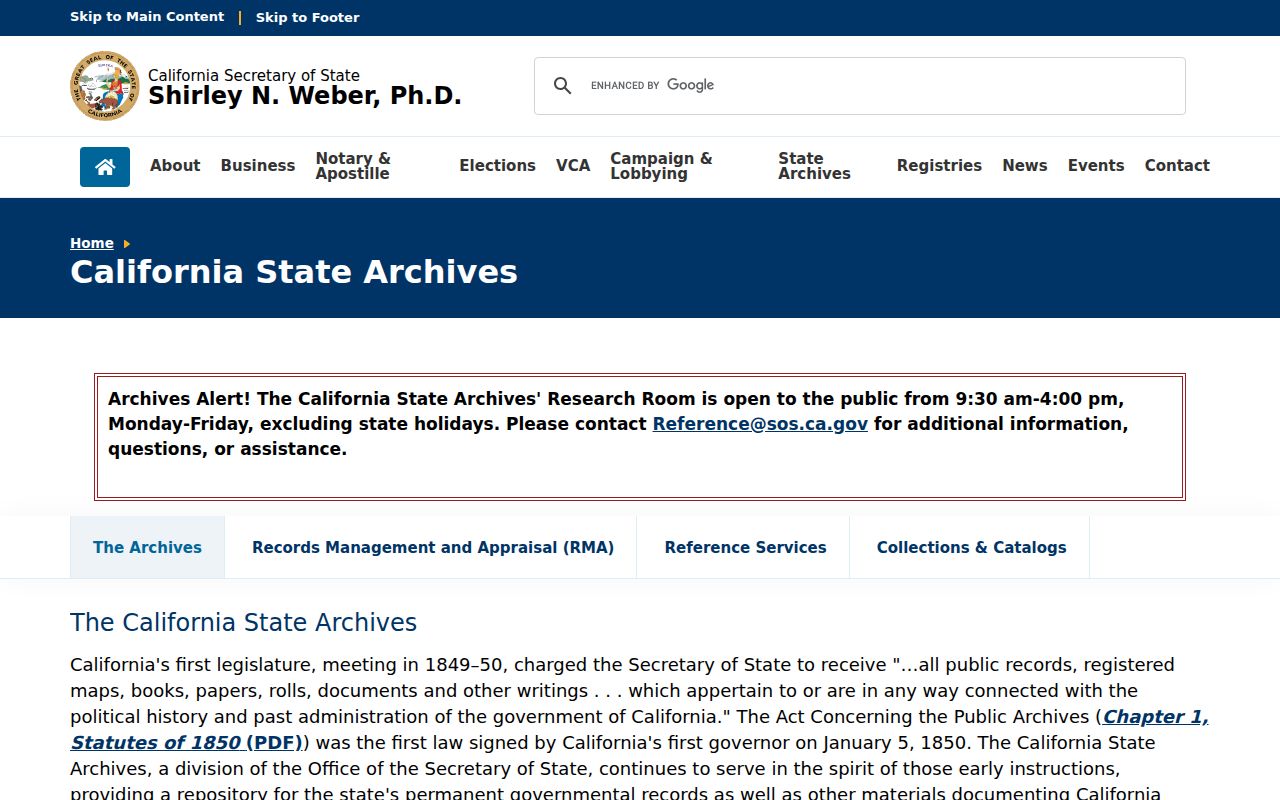
State archival descriptions can help identify a collection or custodian, but no public Millbrae residents roster was verified through that route.
The Millbrae Historical Society's Train Museum occupies the former Southern Pacific depot, rebuilt in 1907. Its waiting room and ticketmaster office hold photographs, artifacts, documents, and books about Millbrae, the Peninsula, and railroad history. The listed address is 200 Constitution Square, with mail at P.O. Box 511 and a 650-692-5786 phone number. Those materials can add local setting to a directory clue, but no public residents roster was verified there.
Millbrae Newspapers Close Directory Gaps
When a city directory stops, newspapers and local archives can supply the next dated clue. The San Mateo County Historical Association archive is noncirculating and uses a Reading Room. Researchers should bring photo ID and catalog numbers, search its PastPerfect Online catalog first, and arrange an appointment. Handheld personal-research photographs may be allowed without flash, tripods, or scanners, subject to fragile, bound, oversize, donor, and copyright limits.
Archive scans have a stated access detail: the first ten PDF pages are free, then the charge is $0.25 per page. Contact archives@historysmc.org or 650-299-0104 before relying on current rules. The collection has photographs, maps, manuscripts, newspapers, and local-history material, but no verified public residents roster. A catalog number is therefore more useful than a broad request for “everyone at an address.”
The San Mateo County Historical Association collections entry point is a practical place to begin the local archive search.
The archive route can add a photo, map, newspaper item, or manuscript reference that explains why a directory entry changes from one year to the next.
For obituaries and death notices, HeritageHub is the SMCL database route with coverage from 1704 to today for qualifying remote users. Newspaper evidence can establish kin and dates, while probate can connect a deceased owner to heirs. Corroborate those clues with an official death or probate record when the trail matters.
Note: A directory entry is a dated lead; preserve the title, year, page type, and exact wording before adding a second source.